
MuseumsPalermo5-min read
Evita Museum
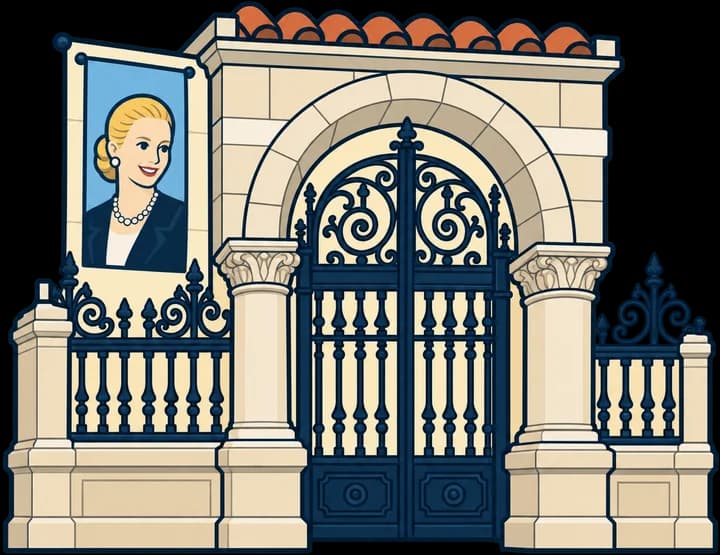
On Calle Lafinur, a few blocks from Plaza Italia, stands a large old house with iron grilles and a tiled patio that looks like just another Palermo residence. It was a good deal more than that: between 1948 and 1955, the foundation of Eva Perón, the first lady everyone called Evita, took in women who arrived here from the provinces with their children. Since 2002 it has been the Evita Museum, which tells her life through her clothes, her papers and her belongings.
From family home to transitional shelter
The architect Estanislao Pirovano designed the house in 1923 as a home for the Carabassa family. It has a Spanish feel, with iron grilles, tiles and details that blend Spanish and Italian Renaissance styles, and almost every room opens onto an open-air patio.
In 1948 it was bought by the Fundación de Ayuda Social María Eva Duarte de Perón, the social aid foundation that Evita headed, and turned into the Hogar de Tránsito No. 2, a transitional home. It was a place to pass through. It took in mostly women from the provinces, many of them on their own and with children, who found a roof and meals while they looked for work and housing. The patio is where they spent their free time.
After the 1955 coup that overthrew Perón, the Foundation’s assets passed to the state and the shelter closed. For decades the house had various official uses, until in 1999 a decree assigned it to the Instituto Nacional de Investigaciones Históricas Eva Perón, the national institute for historical research on her life, as its headquarters and a museum. The Evita Museum opened on July 26, 2002, fifty years to the day after her death. In 2007 the house was declared a National Historic Monument.
A life told in order
Evita still stirs both love and loathing in Argentina. The museum tells her story through her belongings, many of them donated by her own family.
The rooms follow a roughly chronological order, so you don’t need to know anything before you arrive. It starts in Los Toldos, the town in Buenos Aires province where she was born in 1919, and moves on to the girl who came to the capital at fifteen to become an actress and who built her career mainly in radio.
Then Perón enters the story. They met in early 1944 at Luna Park, at a benefit for the victims of the San Juan earthquake, and married in 1945. With him in the presidency, she carved out a role of her own: the Foundation, social aid, her ties with the labor unions and the campaign for women’s right to vote.
The final stretch is short, like her life. In August 1951, at a massive rally on Avenida 9 de Julio, she was asked to run for vice president, and at the end of that month she turned it down in a radio address. She was already ill with cancer. She died on July 26, 1952, at 33. Her body went on a long journey before reaching the Duarte family vault in Recoleta Cemetery, which has its own entry in this guide.
Voter ID No. 1
The law giving women the vote was enacted in September 1947, and women voted in a national election for the first time on November 11, 1951. For that they were issued an ID of their own, the libreta cívica, or civic booklet, and No. 1 was Evita’s. That day she voted from the bed of the hospital where she had undergone surgery a few days earlier. It was the only time she ever voted.
The dresses
There are evening gowns, tailored suits, shoes and hats, and among the designers are Christian Dior and the Argentine couturier Paco Jamandreu. The tailored suit, sober and straight-cut, was what she wore for the long working days at the Foundation, a world away from her gala gowns.
What to look for
A walk from the sidewalk to the patio.
- The facade. Look at it from across the street before going in: this is the 1923 family home, with its iron grilles.
- The rooms, in order, from Los Toldos to her renunciation. The one on the Foundation explains the house you’re standing in.
- The women’s suffrage room, with civic booklets and newspapers from that first election.
- The dresses, with the working suit close to the gala gowns.
- The Andalusian patio, with its tiles and wooden benches. This is where the women of the shelter gathered.
- The shelter’s kitchen, a few steps from the patio, with period furniture.
Planning your visit
- Allow an hour and a half.
- There are guided tours, including in English, and an audio guide. Days and times change, so check them on the museum’s website (in Spanish).
- Plaza Italia station on Line D of the Subte, the city’s subway, is about three blocks away.
- The Botanical Garden is a few blocks away, and the Japanese Garden and MALBA are a longer walk.
Last checked October 2026.