
MuseumsRecoleta5-min read
National Museum of Fine Arts
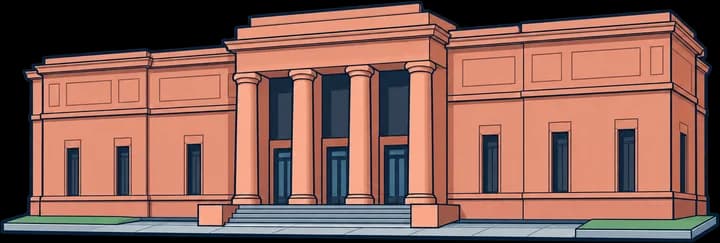
On Avenida del Libertador, next to Plaza Francia, there’s a columned building that, from a passing car, looks like a government office. It’s the National Museum of Fine Arts, the Museo Nacional de Bellas Artes: more than thirteen thousand works, the largest collection of Argentine art in the country, and European works by El Greco, Rembrandt, Goya, Monet and Van Gogh. And before it hung paintings, this building pumped water.
A museum that opened on Christmas Day
President José Evaristo Uriburu signed the decree creating it in 1895, at the request of Eduardo Schiaffino, its first director. It opened on December 25, 1896, in the Bon Marché, a building of shops on Calle Florida that is now the Galerías Pacífico shopping center. It started out with 163 works, mostly from the donations of two collectors, José Prudencio Guerrico and Adriano Rossi.
In 1911 it moved to the Pabellón Argentino, the pavilion Argentina had taken to the 1889 Exposition Universelle in Paris and later reassembled in Plaza San Martín. It stayed there for two decades, until it found a home of its own.
Schiaffino was also the man who commissioned Rodin’s Thinker, in the square in front of Congress.
From pumping water to hanging paintings
The building on Libertador was the Casa de Bombas de Recoleta, the Recoleta pumping station: one piece of the system that drew water from the Río de la Plata and made it safe to drink for the city. It was the same network whose reservoir sat in the Palacio de Aguas Corrientes, on Avenida Córdoba.
In 1931 the city government handed it over to the Comisión Nacional de Bellas Artes, the national fine arts commission, and the architect Alejandro Bustillo adapted it. He gave it the columned portico you see from the sidewalk and laid out large, well-lit galleries with light-colored walls inside. The museum moved in in 1933 and has stayed put ever since.
Behind the original building is a pavilion added in 1960 for the 150th anniversary of the May Revolution, the 1810 uprising that began the break with Spain. Today it’s used for temporary exhibitions.
Rodin’s gift
In 1906 Schiaffino traveled to Europe to buy works for the museum. He stopped by Auguste Rodin’s studio and bought two sculptures from him. Rodin returned the favor with a gift: a plaster of The Kiss, the embracing couple he had conceived for his Gates of Hell. It stands nearly 1.8 meters tall, and today it’s on display on the ground floor.
It isn’t the only Rodin in the house: there are about thirty, in bronze, marble and plaster.
What to look for
Works move between galleries over time, so treat this as a list of things to hunt for, not as a map.
- The Kiss, by Rodin, on the ground floor.
- The Europeans. El Greco’s Jesus in the Garden of Olives; a portrait by Rembrandt and his workshop; Goya; Manet’s The Surprised Nymph; Monet’s Banks of the Seine; Van Gogh’s Le Moulin de la Galette; and Gauguin’s Woman of the Sea.
- El despertar de la criada (The Maid’s Awakening), by Eduardo Sívori. He painted it in Paris and sent it to Buenos Aires in 1887, where it was branded indecent before hardly anyone had seen it. It’s considered the city’s first art scandal, and what offended people wasn’t just the nude: a society portraitist had painted a maid, with bunions and dark skin.
- Sin pan y sin trabajo (Without Bread and Without Work), by Ernesto de la Cárcova. It dates from 1894: an out-of-work laborer facing an empty table, and his wife nursing a baby. It was one of the first Argentine paintings to take on the social question, the plight of the working poor, head-on. Look out, too, for La vuelta del malón (The Return of the Raiding Party), by Ángel Della Valle, painted for the Chicago world’s fair and first shown in a shop window on Calle Florida.
- Cándido López. He fought in the Paraguayan War, and in the assault on Curupaytí, in 1866, a grenade cost him his right hand. It took him years to learn to paint with his left, and from the sketches he had made at the front he painted his views of camps and battles. In his day he was known as el Manco de Curupaytí, the one-handed man of Curupaytí.
- The 20th century. Pettoruti, Xul Solar, Quinquela Martín and Antonio Berni on the Argentine side; Picasso, Kandinsky, Pollock and Rothko on the other.
- The oldest pieces. The pre-Hispanic and colonial art galleries, reopened in 2019, hold ceramics from Argentina’s Northwest up to 2,500 years old, and the Tablas de la Conquista de México, Miguel González’s panels of the conquest of Mexico, painted around 1700.
Planning your visit
- Allow about two hours, a bit more if you want to see the temporary exhibition.
- Opening days, hours and the way to pay for admission change, so check them on the museum’s website.
- On the Subte, the city’s subway, the nearest station is Facultad de Derecho, on Line H.
- Plaza Francia is right next door. Across Avenida Figueroa Alcorta are the UBA Law School and the Floralis Genérica sculpture, and the Recoleta Cemetery is about four blocks away.
Last checked October 2026.