
FoodBelgrano5-min read
Chinatown
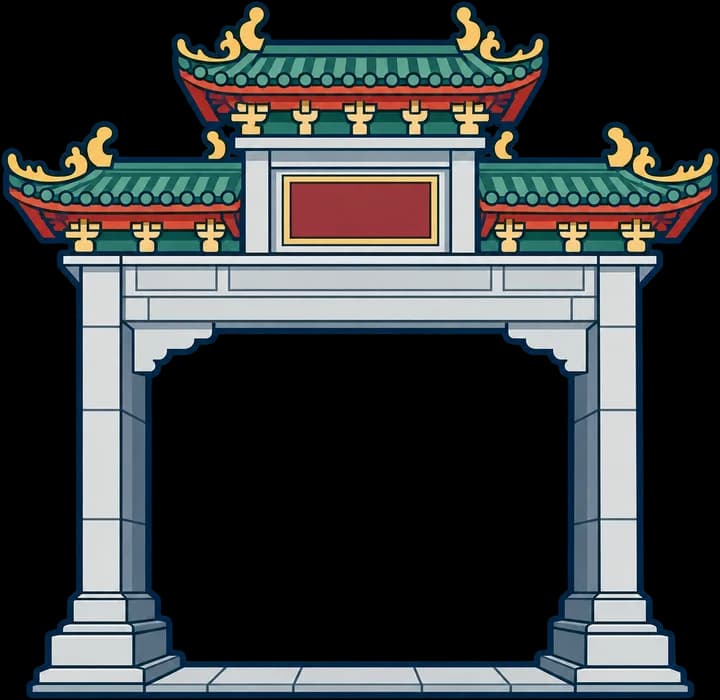
You get off the train at Belgrano C, walk a few meters along Juramento and pass under an eleven-meter red-and-gold archway. On the other side, along Calle Arribeños, begin a few blocks of Asian supermarkets, street-food stalls and restaurants. It isn’t an official neighborhood, just a slice of Belgrano, but it’s where plenty of porteños, as the people of Buenos Aires are called, come to eat something different and to buy what they can’t find anywhere else.
Started by Taiwanese families
It’s called Chinatown, Barrio Chino in Spanish, but its first residents came from Taiwan. In the 1980s, Taiwanese families gradually settled on these blocks of Bajo Belgrano, the low-lying part of the neighborhood, next to the tracks of the Mitre railway line, and later others arrived from mainland China and from Japan. According to the city government, it all began with a supermarket and a restaurant: the community needed the rice, sauces and spices that the local grocery stores didn’t carry.
In 1988 a Taiwanese monk, Master Pu Hsien, founded the Tzong Kuan Buddhist temple on Calle Montañeses, which the city spells Chong Kuan. It was one of the first Buddhist temples in Buenos Aires. From the sidewalk it looks like just another house on the block, and inside you take your shoes off.
It never became a neighborhood of its own. Buenos Aires has 48 official neighborhoods, or barrios, and Chinatown isn’t one of them: it’s part of Belgrano, which was a town in its own right until it joined the city in 1887.
The aisles
The most interesting thing in the neighborhood isn’t always on your plate. The supermarkets on Arribeños sell several kinds of rice, noodles, Asian sauces, spices, sake, and imported beers and juices, along with tableware, kitchen utensils and decorations. In the freezers there are pork dumplings to boil at home, and fortune cookies turn up near the checkout. If you cook, this is the place to look for what an ordinary supermarket doesn’t carry.
Food on the go
Much of what people eat here, they eat on foot. The stalls sell pork dumplings and mandu, bao, which are stuffed steamed buns, Taiwanese-style fried chicken and kanikama (imitation crab) bites. In Pasaje Echeverría, behind the station, almost none of the places have waiters or tables, and people eat standing on the sidewalk.
To drink there’s tea with tapioca pearls, bubble tea, which was born in Taiwan and shows up in many hands. If you’d rather sit down, the restaurants cover Chinese, Japanese, Korean and Taiwanese cooking, with ramen and sushi, and several cluster on Arribeños toward Calle Mendoza.
Under the tracks
Until 2019, the Mitre line crossed Belgrano at street level, with crossing gates. That year the viaduct opened and the tracks were raised. The space freed up underneath became Vía Viva, a pedestrian promenade that opened in 2023 with more than forty businesses, most of them selling food. Here the neighborhood stretches toward the Barrancas, with outdoor tables and food that’s no longer only Asian.
A walk to eat your way through
- The archway. Enter at Juramento and Arribeños, and look at the dragons and lions before you walk through.
- The supermarkets on Arribeños. The aisles first, while your hands are free.
- The stalls. Pick two or three small things: the fun is in tasting.
- The walls. There are colorful murals on several corners, some by the street artist Índigo.
- Pasaje Echeverría and Vía Viva, behind the station and under the viaduct.
- The Barrancas de Belgrano, on the other side of the tracks, to sit on the grass for a while.
Chinese New Year
Every year, between late January and early February, depending on the lunar calendar, the neighborhood celebrates the New Year. The streets fill with food stalls, and there are lion and dragon dances, martial arts, music and calligraphy. It’s the best time to see the neighborhood out in the street and the worst time to explore it calmly: thousands of people come.
Planning your visit
- Allow one to two hours, more if you’re going to sit down for a meal.
- It gets packed on weekends and public holidays: if you want to walk around without getting jostled, go early. In the crowds, keep your phone and wallet in a front pocket.
- Each place keeps its own hours, and the date of the New Year changes every year. Check the city’s tourism website.
- You can get there on the Mitre line to Belgrano C, or on Line D of the Subte, the city’s subway, to Juramento and then a few blocks on foot.
- The Monumental, River Plate’s stadium, and the Lagos de Palermo, the lakes in Palermo’s parks, are just over a kilometer away.
Last checked October 2026.